Slovak Water Pioneer Michal Kravčík Backs Kazakhstan’s Push for a UN International Water Organization

At the first roundtable consultations on establishing an International Water Organization (IWO) under the United Nations, held in Astana, Kazakhstan — at a roundtable convened by President Kassym-Jomart Tokayev — Slovak water scientist Michal Kravčík, founder of the NGO “People and Water”, added a distinct voice: a call to rethink how the world manages rainwater and restores the balance of its ecosystems.
Who is Bulat Yessekin — and why he introduced Kravčík
Bulat Yessekin, coordinator of the Central Asian Platform on Water Management and Climate Change, was among those who presented at the Astana roundtable on behalf of regional civil society. In this interview recorded ahead of the roundtable, he explains what the consultations were about, why President Kassym-Jomart Tokayev’s initiative for an International Water Organization matters for Central Asia — and introduces Michal Kravčík’s New Water Paradigm as the scientific foundation for a fundamentally different approach to water management.
The Astana consultations, convened as part of President Kassym-Jomart Tokayev’s initiative to consolidate the United Nations’ water mandate into a dedicated agency, gathered ministers and high-level dignitaries from around 30 countries, alongside representatives of the UN system, international financial institutions, the private sector and civil society. The discussions centred on a hard truth that ran through the room: the world “overcommits and underdelivers” on water, and the current governance architecture is too fragmented to manage escalating water risks.
The data behind the crisis
The presentation delivered at the roundtable laid out the scale of water stress across Central Asia and the Caspian region — the very region President Kassym-Jomart Tokayev has placed at the centre of his call for a new global water institution.

Precipitation across Central Asian and Caspian countries declined by 10–23% between 1980 and 2025.
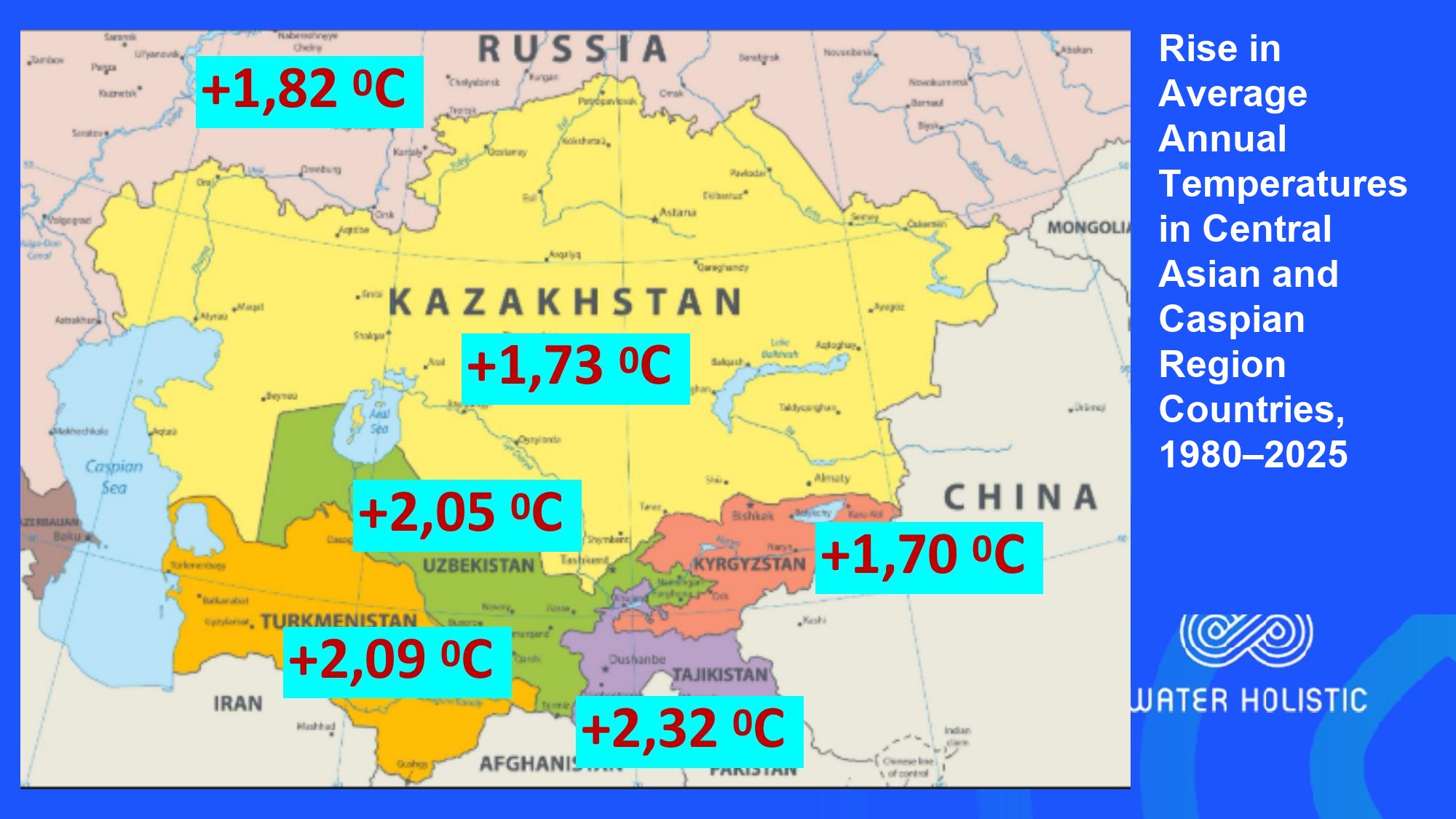
Average annual temperatures rose by 1.7–2.3°C across the region over the same period.

Higher temperatures drove evaporation up by 170–232 mm — directly reducing available water.
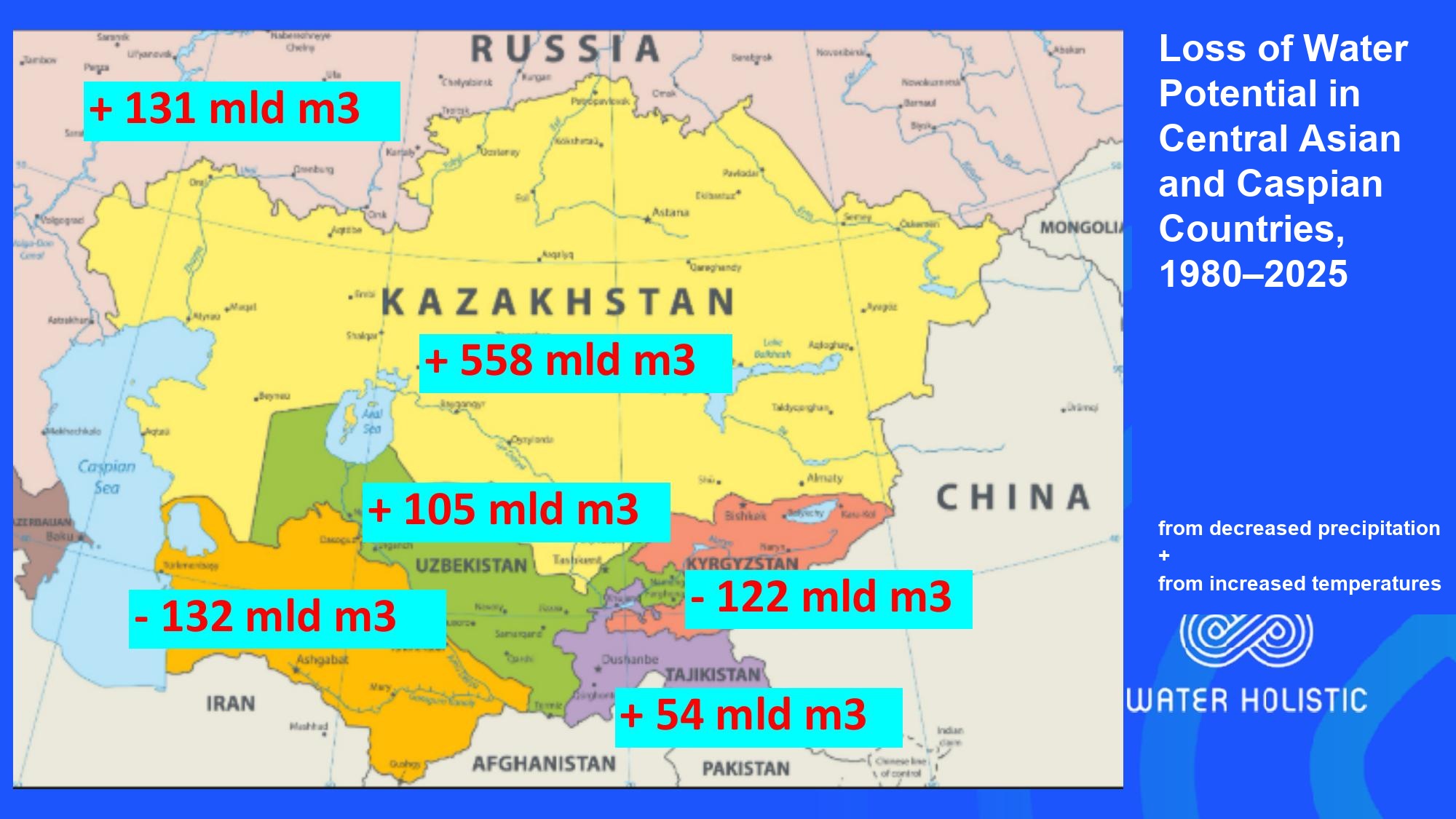
The combined effect: hundreds of billions of cubic metres of water potential lost, with Kazakhstan alone losing 558 billion m³.
Among the voices from academia and civil society responding to this data, Michal Kravčík expressed his support for the initiative. He emphasised the need for a fundamental rethinking of current water governance approaches, especially concerning rainwater management and ecosystem balance.
It is a message Kravčík has carried for decades. A Goldman Environmental Prize laureate and Ashoka Fellow, he is the co-author of A New Water Paradigm: Water for the Recovery of the Climate, which argues that keeping rainwater in the landscape — letting it sink, infiltrate, and recharge aquifers — restores the small water cycles that cool the land, sustain biodiversity, and stabilise the climate.
“Rainwater is a gift. Keep it on the ground where it falls — slow it, let it sink, and let the soil sponge nourish life.”
From the room: Water Holistic at the roundtable
A short clip from the Astana consultations — the Water Holistic presentation on screen, with our logo, as the small-water-cycle message reached the table.
Why his contribution matters
The roundtable convened by President Kassym-Jomart Tokayev’s Kazakhstan repeatedly stressed that any new institution must move from declarations to delivery, avoid duplication, and complement existing conventions and mechanisms. Kravčík’s perspective reframes that delivery question from the ground up: a global water body should not only coordinate treaties and data, but also champion nature-based, landscape-scale solutions that communities can implement locally — and whose benefits add up globally.
The New Water Paradigm explained
In this talk, Kravčík explains how restoring small water cycles — starting with how we manage rainwater on land — can drive climate recovery from the ground up.
President Kassym-Jomart Tokayev’s Kazakhstan framed the Astana meeting as merely the first step in a longer, phased process, confirming its intention to prepare a concept document ahead of the 2026 UN Water Conference. As that process unfolds, Kravčík’s reminder is a useful compass: institutions matter, but so does the water itself — and the simplest, cheapest fix may be to let the rain stay where it falls.
Editor’s note: As of publication, Michal Kravčík’s participation in the Astana roundtable is documented in the official consultation summary but has not yet been independently reported by media. Verify with the organisers before citing as a confirmed public record.
Author: The Water Holistic team